Presidential Vacation

Gettysburg & Philadelphia, PA

June 20 – June 23, 2026

Who Joined

Dan
Dave
Jason
Kyle
Ryan

Itinerary

Day 1

Arrival — Valley Forge & Gettysburg

Saturday, June 20
  • Arrive at Philadelphia International Airport
  • Valley Forge National Historical Park
  • Gettysburg National Military Park — outside areas
Day 2

Gettysburg Museum → Philadelphia & Citizens Bank Park

Sunday, June 21
  • Gettysburg National Military Park Museum and Visitor Center
  • Travel to Philadelphia
  • New York Mets vs. Philadelphia Phillies at Citizens Bank Park
Day 3

The Constitutional — Historic Philadelphia

Monday, June 22
  • Walk The Constitutional beginning at Independence Visitor Center
  • Liberty Bell Center
  • Independence Hall
  • Congress Hall
  • Carpenters' Hall
  • National Constitution Center
  • The President's House
  • Benjamin Franklin Museum
  • Museum of the American Revolution
  • Christ Church Burial Ground
  • Philadelphia Museum of Art — steps and Rocky statue
Day 4

Departure

Tuesday, June 23
  • Depart for home

Historical Sites

Valley Forge National Historical Park

Valley Forge National Historical Park

The 3,500-acre national park west of Philadelphia preserving the site of the Continental Army's 1777–78 winter encampment — where George Washington's forces endured brutal cold and hardship and emerged as a disciplined, battle-ready army.

Learn more

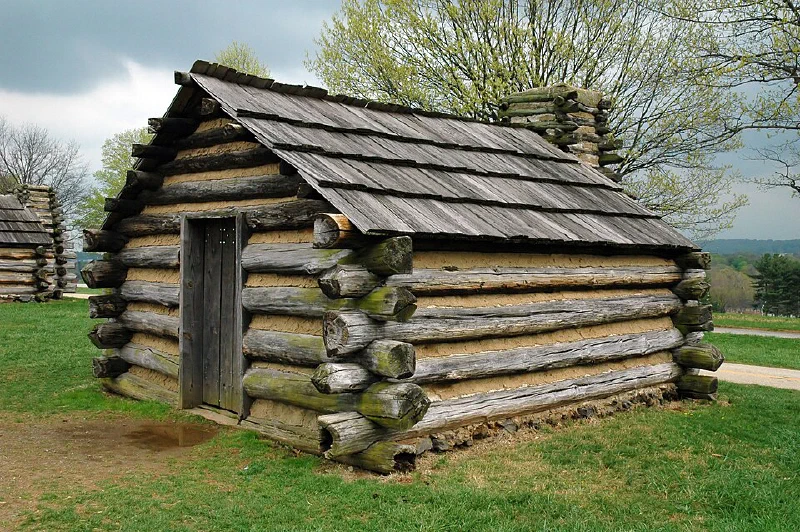
Valley Forge was not a battle but a crucible. In December 1777, Washington marched his army of roughly 12,000 soldiers into the fields and woods twenty miles northwest of Philadelphia after a string of defeats that had allowed the British to occupy the city. Over the following six months the army built a city of log huts, suffered starvation, disease, and exposure, and buried as many as 2,000 men in unmarked graves — more than fell at Trenton, Brandywine, and Germantown combined.

What transformed the army was the arrival of Friedrich Wilhelm Augustus von Steuben, a Prussian officer who reached Valley Forge in February 1778 and immediately began drilling the ragged Continental regiments into something resembling a professional fighting force. The manual he wrote during that winter, Regulations for the Order and Discipline of the Troops of the United States, became the basis for American military training for decades. By June 1778, when the British evacuated Philadelphia, Washington’s army was capable of engaging a European professional force on equal terms — as demonstrated weeks later at the Battle of Monmouth.

The park today encompasses Washington’s headquarters at the Isaac Potts House, the National Memorial Arch, reconstructed soldier huts, earthwork fortifications, and a visitor center with exhibits on the encampment. A driving tour loops ten miles through the grounds, passing the artillery park, brigade encampment sites, and the Grand Parade where von Steuben ran his famous drills.
Gettysburg National Military Park

Gettysburg National Military Park

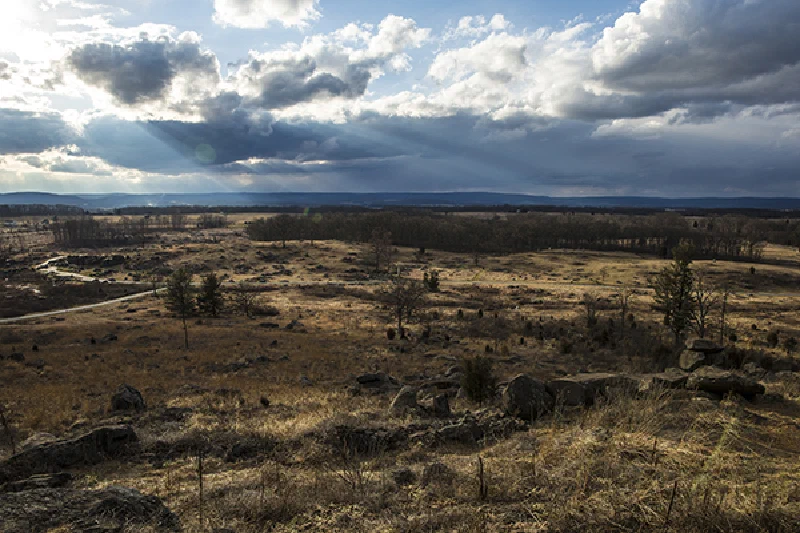
The 6,000-acre battlefield and national park preserving the site of the July 1–3, 1863 Battle of Gettysburg — the bloodiest engagement of the Civil War and the turning point that ended the Confederacy's last major offensive into the North.

Learn more

The Battle of Gettysburg was fought over three days in the first week of July 1863, when General Robert E. Lee’s Army of Northern Virginia collided with Major General George Meade’s Army of the Potomac in the rolling farmland south of the Pennsylvania borough. The engagement began almost accidentally on July 1 when Confederate forces moving toward Gettysburg encountered Union cavalry along Chambersburg Pike. By afternoon, fighting had engulfed the ridgelines north and west of town, and the Union forces fell back to Cemetery Hill and Culp’s Hill south of the borough.

July 2 brought the war’s most desperate fighting. Confederate attacks on the Union left — through Devil’s Den, the Wheatfield, the Peach Orchard, and up the rocky slopes of Little Round Top — came within yards of collapsing the Union line. The 20th Maine Infantry’s bayonet charge down Little Round Top under Colonel Joshua Lawrence Chamberlain held the extreme left flank and has become among the most celebrated actions in American military history.

On July 3, Lee ordered a frontal assault against the Union center on Cemetery Ridge. Pickett’s Charge — nearly 12,500 Confederate soldiers advancing across three-quarters of a mile of open field under devastating artillery and rifle fire — broke against the Union line at the “High Water Mark of the Confederacy.” The Confederate army withdrew southward on July 4, leaving behind roughly 51,000 combined casualties, the largest of any engagement fought in the Western Hemisphere.

The battlefield is one of the most comprehensively preserved in the world. The Museum and Visitor Center, opened in 2008, houses the Gettysburg Cyclorama — a 360-degree painting of Pickett’s Charge measuring 42 feet tall and 377 feet in circumference — along with thousands of artifacts and an immersive film narrated by Morgan Freeman. Auto tour routes wind through the battlefield’s most significant positions, and ranger programs interpret the fighting from both Union and Confederate perspectives.

Abraham Lincoln delivered the Gettysburg Address here on November 19, 1863, at the dedication of the Soldiers’ National Cemetery, where 3,512 Union soldiers are interred.

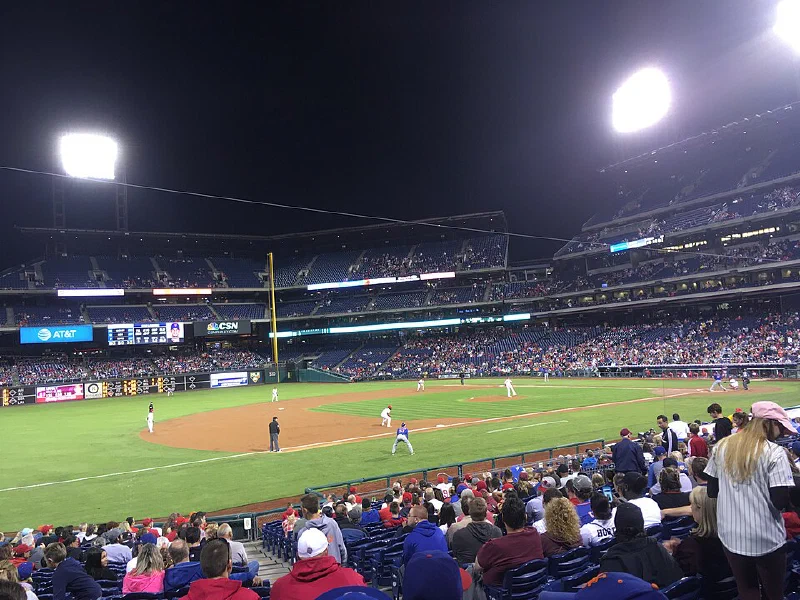
Citizens Bank Park

Citizens Bank Park

Home of the Philadelphia Phillies since 2004, a natural-grass ballpark in South Philadelphia's Sports Complex — featuring an asymmetric field, a Liberty Bell that lights up on home runs, and one of the most passionate fan bases in baseball.

Learn more

Citizens Bank Park opened on April 3, 2004, replacing Veterans Stadium, the multi-purpose artificial-turf facility that had served the Phillies since 1971. The new park was built directly adjacent to its predecessor in the South Philadelphia Sports Complex, and unlike Veterans Stadium it was designed exclusively for baseball — with natural grass, an asymmetric field, and sightlines optimized for the game. HOK Sport designed the structure, incorporating red brick and exposed steel to evoke Philadelphia’s industrial and historic character.

The park’s signature feature is the Liberty Bell replica mounted above the scoreboard in center field, which lights up and swings whenever a Phillie hits a home run. A 50-foot-wide solar system, one of the largest in the world, is embedded in the concourse behind home plate. The ballpark’s capacity of 42,792 routinely fills during contention years, and the Phillies fanbase — known for its intensity and occasionally its hostility — has turned Citizens Bank Park into one of the more intimidating visiting environments in the National League.

The 2026 trip’s Mets–Phillies matchup delivered a comfortable Phillies victory. Kyle Schwarber’s three-run home run in the second inning off David Peterson broke the game open, and Zack Wheeler was dominant through 5⅔ innings, striking out seven Mets batters. Bryce Harper added a solo shot in the fifth. Carson Benge provided New York’s only extra-base hit with a solo home run in the third. The Phillies won 6–2 in front of 41,552 fans on a warm June evening.

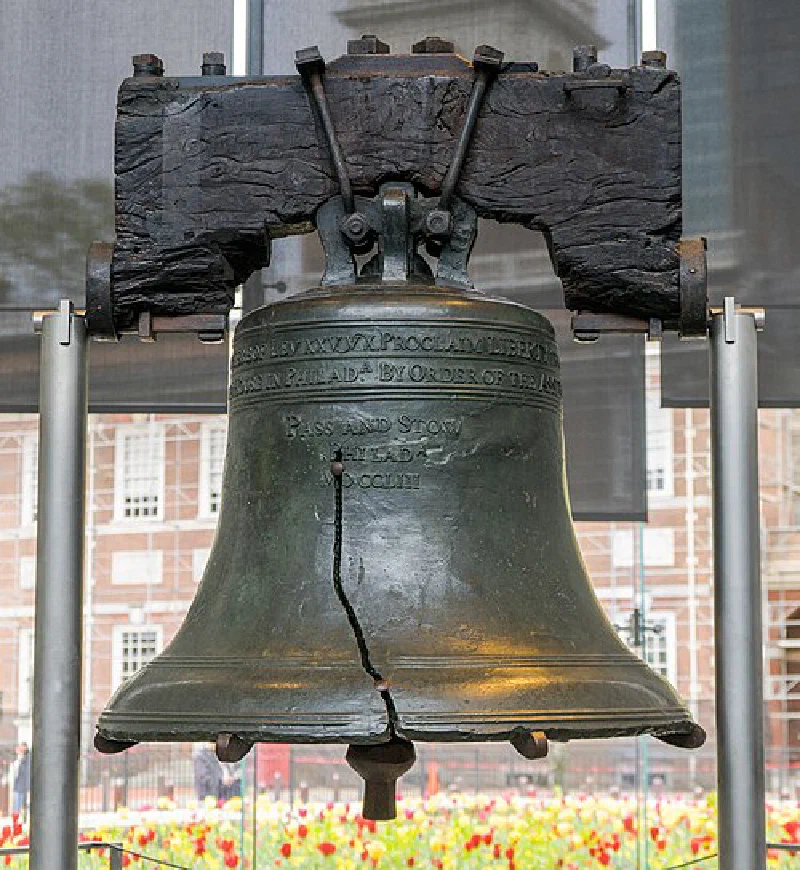
Liberty Bell Center

Liberty Bell Center

The modern glass pavilion on Market Street housing the Liberty Bell — the 2,080-pound bronze bell that became the enduring symbol of American independence and, later, of the abolitionist movement.

Learn more

The Liberty Bell was cast in London at the Whitechapel Bell Foundry in 1752 and shipped to Philadelphia for the Pennsylvania State House — the building now known as Independence Hall. It cracked on its first test ring, was recast twice by Philadelphia craftsmen John Pass and John Stow, and hung in the State House steeple for decades, rung for public announcements, legislative sessions, and civic ceremonies. Its inscription, drawn from Leviticus 25:10, reads: “Proclaim Liberty Throughout All the Land Unto All the Inhabitants Thereof.”

The bell’s most famous crack — the one visible today — developed sometime in the nineteenth century, likely around 1846, when attempts to repair an earlier fissure by widening the crack to prevent metal fatigue instead made the bell permanently unringable. By that time the bell had already been adopted by abolitionists as a symbol. Pennsylvania Anti-Slavery Society publications in the 1830s were among the first to call it the “Liberty Bell,” and the name — along with the bell’s image — appeared widely in antislavery literature long before it became the patriotic symbol of Independence Day tradition.

The bell was moved from various locations in and around Independence Hall over the years before settling in its current purpose-built home, the Liberty Bell Center, which opened in 2003 adjacent to Independence Hall. The glass-walled pavilion allows visitors to see the bell up close and frames it against the backdrop of Independence Hall through the rear windows — a deliberate design choice connecting the physical object to the building it came from.

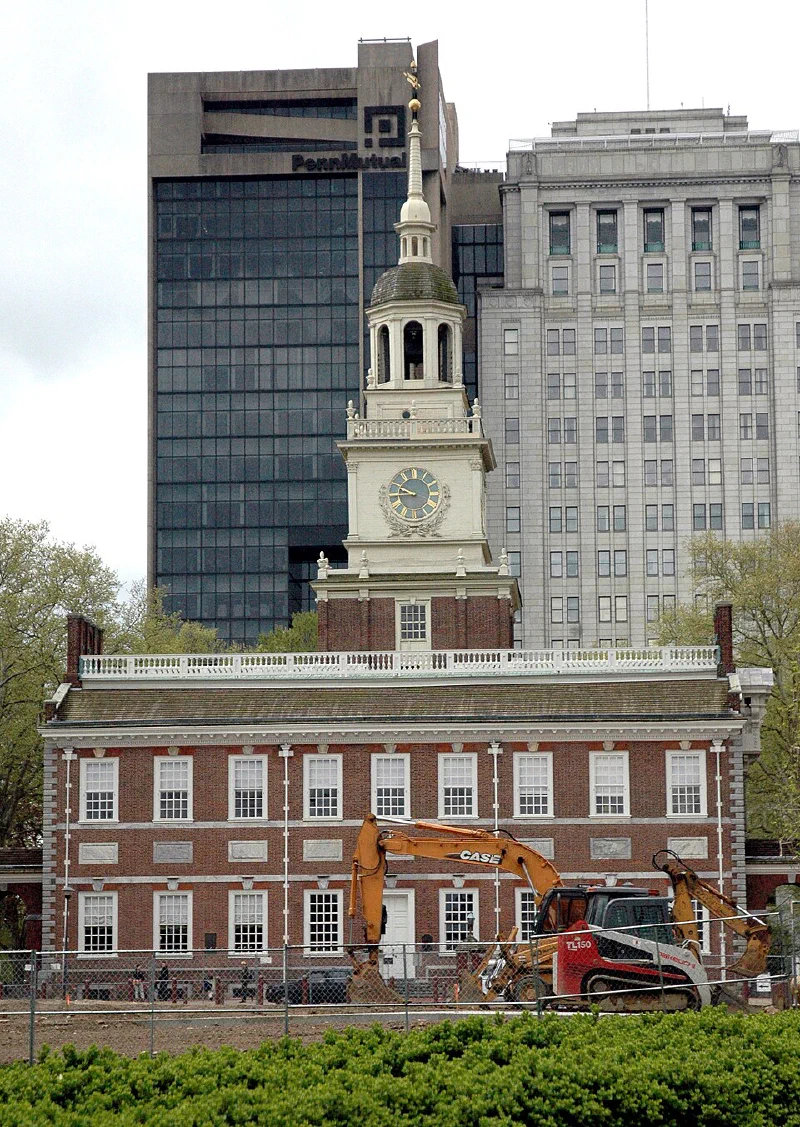
Independence Hall

Independence Hall

The red-brick Georgian building where the Declaration of Independence was adopted on July 4, 1776, and where the United States Constitution was drafted and signed in 1787 — the most consequential building in American history.

Learn more

Independence Hall was built between 1732 and 1756 as the Pennsylvania State House, designed by master carpenter Edmund Woolley and lawyer Andrew Hamilton in the Georgian style. Its Assembly Room on the first floor became the meeting place of the Second Continental Congress beginning in 1775, and it was here, in the summer heat of 1776, that delegates from thirteen colonies debated and adopted Thomas Jefferson’s Declaration of Independence.

The same room hosted the Constitutional Convention from May to September 1787, where 55 delegates from twelve states labored through a Philadelphia summer without opening the windows — to prevent eavesdropping — and produced the document that remains the supreme law of the United States. The proceedings were kept secret throughout, and James Madison’s detailed notes on the debates were not published until after his death in 1836. George Washington presided over the convention from the chair at the front of the Assembly Room, the carved sun on its back prompting Benjamin Franklin’s remark at the signing that he could now see it was a rising sun, not a setting one.

The building’s second floor houses the Long Gallery, used for state banquets, and the Governor’s Council Chamber and Supreme Court Chamber. The tower, added in 1828, holds a replica of the bell tower’s original design. Independence Hall was designated a UNESCO World Heritage Site in 1979, recognized alongside the nearby Chestnut Street buildings as a place of universal significance to the history of democratic governance.

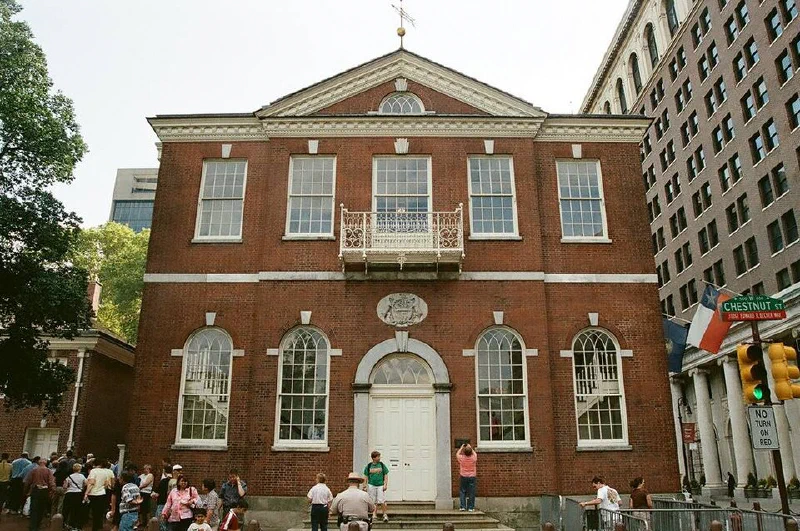
Congress Hall

Congress Hall

The Federal-period building at the corner of Sixth and Chestnut that served as the meeting place of the United States Congress from 1790 to 1800, while Philadelphia was the nation's capital — where the Bill of Rights was enacted and two presidential inaugurations took place.

Learn more

Congress Hall was built between 1787 and 1789 as the Philadelphia County Courthouse, but the federal government’s arrival in the city quickly claimed it for national use. The House of Representatives met on the ground floor and the Senate in the chamber above during the decade Philadelphia served as the temporary seat of government while Washington City was under construction along the Potomac.

The legislation passed in this building shaped the new republic. The Bill of Rights — the first ten amendments to the Constitution — was drafted, debated, and enacted here in 1791 by the First Congress. The building also witnessed the creation of the first National Bank, the establishment of a permanent U.S. Mint, and the admission of Vermont, Kentucky, and Tennessee as states. George Washington was inaugurated for his second term here in 1793, and John Adams took the first presidential oath of office to occur in the building in 1797.

The interior has been carefully restored to its appearance during the congressional years. The House chamber retains its original tiered seating and the speaker’s raised platform, while the Senate chamber above preserves the red velvet furnishings and canopied presiding officer’s chair associated with the republic’s formative decade. Congress Hall stands immediately west of Independence Hall and is administered as part of Independence National Historical Park.

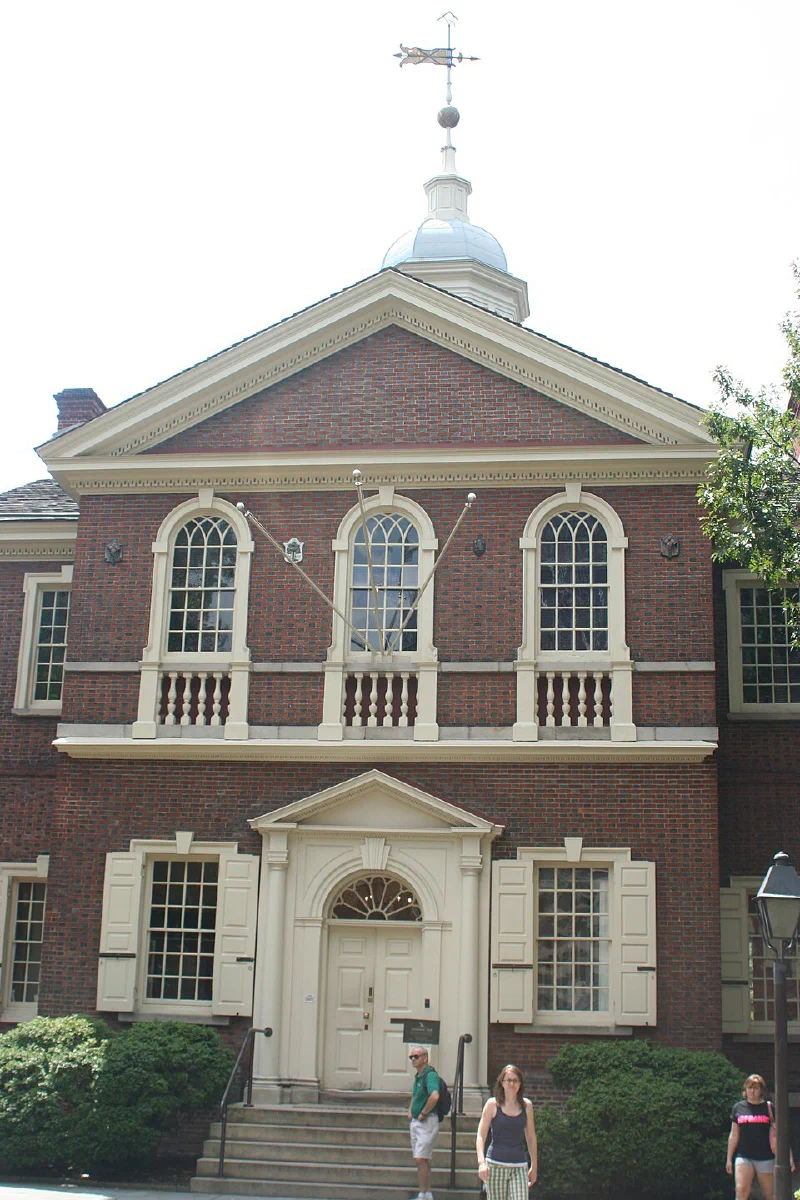
Carpenters' Hall

Carpenters' Hall

The 1774 Georgian hall built by the Carpenters' Company of Philadelphia that hosted the First Continental Congress — the initial meeting of delegates from twelve colonies that began the organized American resistance to British rule.

Learn more

Carpenters’ Hall was completed in 1774 as the headquarters and meeting place of the Carpenters’ Company, a guild of master builders founded in 1724 and still active today as the oldest trade organization in the United States. The building was designed by Robert Smith in the Georgian style, with a distinctive octagonal cupola, and sits in a courtyard just south of Chestnut Street in what is now Independence National Historical Park.

In September 1774, before the building was fully finished, the Carpenters’ Company offered the hall as a meeting place for the First Continental Congress. Fifty-six delegates from twelve colonies — all except Georgia — convened here to coordinate a response to the Intolerable Acts, the British parliamentary legislation that had closed Boston Harbor and curtailed colonial self-governance in the aftermath of the Boston Tea Party. The Congress produced a Declaration of Rights and Grievances, called for a boycott of British goods, and agreed to reconvene if the situation did not improve — setting the institutional framework that would make the Second Continental Congress, meeting the following year, the effective government of the American colonies.

The building remains privately owned by the Carpenters’ Company and is open to the public as a museum. A collection of period woodworking tools, architectural drawings, and artifacts related to the First Continental Congress occupies the interior. Carpenters’ Hall is the only First Continental Congress meeting site that retains its original appearance and remains in the ownership of the organization that hosted the historic meeting.

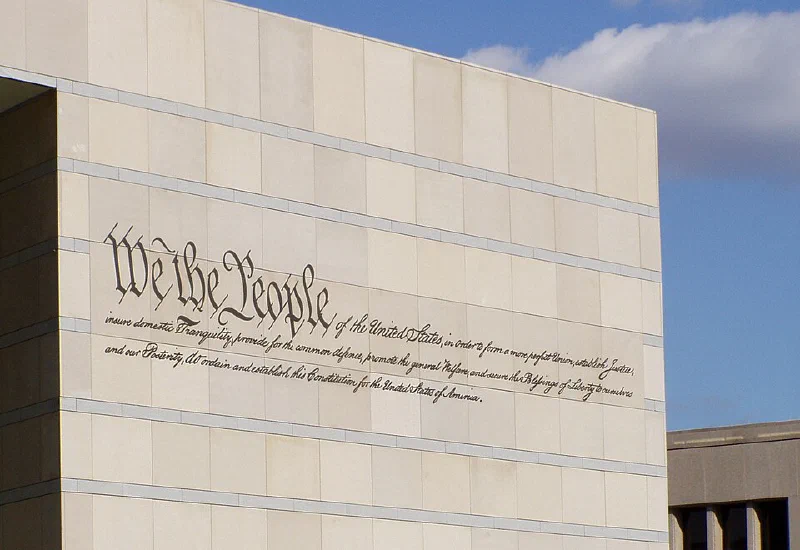
National Constitution Center

National Constitution Center

The museum and civic institution on Independence Mall dedicated to the history and ongoing relevance of the United States Constitution, featuring interactive exhibits, a theater presentation, and "Signers' Hall" — a room of life-size bronze statues of the Constitution's signers.

Learn more

The National Constitution Center opened on July 4, 2003 — the first museum in the United States dedicated to the Constitution — on the northern edge of Independence Mall, directly across from Independence Hall. The building was designed by Henry N. Cobb of Pei Cobb Freed & Partners and features a curved granite and glass facade intended to suggest the arc of democratic deliberation. Congress established the center through the National Constitution Center Act of 1988, signed by Ronald Reagan.

The museum’s signature experience is Freedom Rising, a 17-minute theatrical production combining film and live performance that narrates the history of the Constitution from the framing debates of 1787 through the present day. The show plays in a circular, 360-degree theater under a dome meant to recall the idea of We the People surrounding the document they created.

Signers’ Hall presents 42 life-size bronze statues of the 39 men who signed the Constitution and the three delegates who refused — including Edmund Randolph and George Mason of Virginia and Elbridge Gerry of Massachusetts, who declined on principled grounds. Visitors can walk among the figures and examine their expressions, captured at the moment of the signing.

The center operates as a nonpartisan institution and hosts Constitution Day events each September 17, the anniversary of the signing. Its collections include rare copies of the Constitution, the Bill of Rights, and artifacts from two and a half centuries of constitutional history and interpretation.

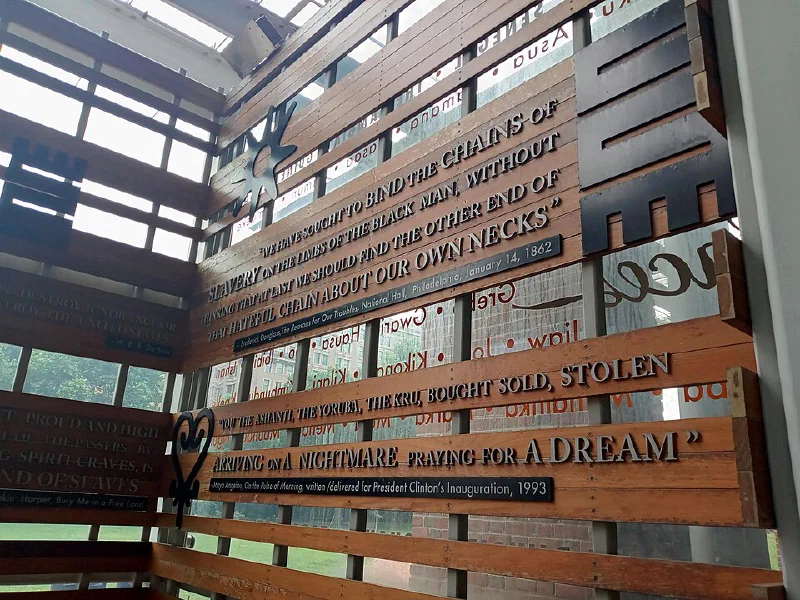
The President's House

The President's House

An outdoor memorial and archaeological site at 6th and Market Streets marking the location of the executive mansion occupied by Presidents Washington and Adams from 1790 to 1800 — and acknowledging the enslaved people who lived and worked there.

Learn more

The President’s House is not a building but a memory. The structure that stood at the corner of Sixth and Market Streets from the 1760s until its demolition in 1832 served as the executive residence for George Washington and John Adams during the decade Philadelphia was the nation’s capital. Washington occupied the house from 1790 to 1797, overseeing significant renovations to accommodate his large household, which included family members, secretaries, and a staff of nine enslaved people brought from his Mount Vernon plantation.

The house’s history took on a deeply contested dimension when historians and advocates pointed out in the early 2000s that the planned Liberty Bell Center would be built directly over the house’s footprint, and that the enslaved people’s quarters — including a kitchen and sleeping areas — lay directly beneath the planned entrance. Washington, aware that Pennsylvania’s Gradual Abolition Act could free enslaved people who lived in the state for more than six months, rotated his enslaved staff back to Virginia at intervals specifically to circumvent the law. Oney Judge, an enslaved woman in Washington’s household, escaped to freedom from this location in 1796.

The outdoor memorial that opened in 2010, designed by Kelly/Maiello Architects and Planners, preserves exposed sections of the original foundation walls and uses glass pavilions and interpretive panels to tell the story of both the presidential household and the enslaved people who made it function. The site sits immediately north of the Liberty Bell Center and is administered by the National Park Service as part of Independence National Historical Park.

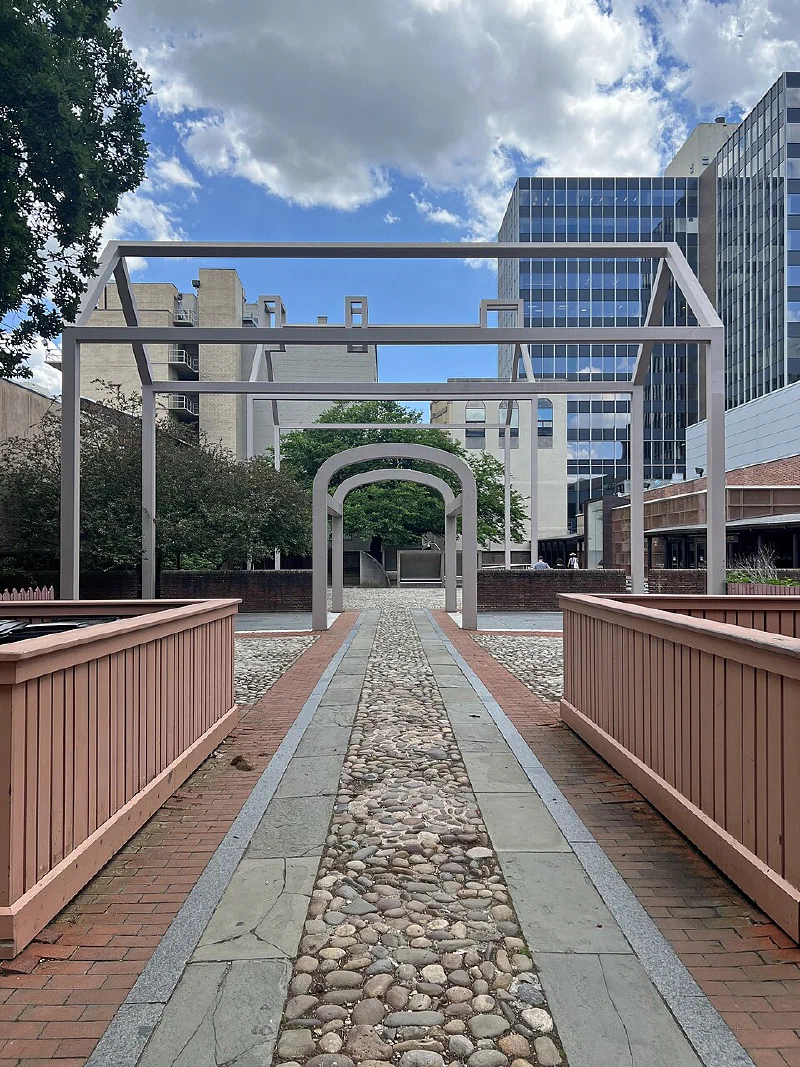
Benjamin Franklin Museum

Benjamin Franklin Museum

The underground museum beneath Franklin Court, on the site of Benjamin Franklin's home, presenting Franklin's life as printer, scientist, inventor, diplomat, and Founding Father through interactive exhibits and original artifacts.

Learn more

Benjamin Franklin lived at the property he called “my own house” on Market Street for much of his adult life, though the house was demolished in 1812 — less than 25 years after his death. Franklin Court, the site today, takes an architectural approach designed by Robert Venturi and Denise Scott Brown and opened in 1976 for the Bicentennial: steel “ghost structures” in the courtyard trace the outlines of Franklin’s house and print shop without attempting to recreate buildings for which the exact appearance is unknown, a decision that has been both praised as intellectually honest and criticized as emotionally unsatisfying.

Below the courtyard, the Benjamin Franklin Museum opened in 2013 as a complete renovation of an earlier facility on the same site. The museum covers Franklin’s full career — the self-taught printer who published the Pennsylvania Gazette and Poor Richard’s Almanack, the scientist whose kite experiment in a thunderstorm (probably conducted nearby, though the exact location is disputed) established the electrical nature of lightning, the inventor of the lightning rod, bifocals, and the Franklin stove, the colonial agent in London, the diplomat who secured the French alliance that won the Revolutionary War, and the elder statesman who presided over the Constitutional Convention at age 81.

The museum’s collection includes Franklin’s writing desk, original editions of his publications, scientific instruments, and letters. Franklin is buried nearby at Christ Church Burial Ground, and his grave — visible through an iron fence at Fifth and Arch Streets — is one of the most visited sites in the city.

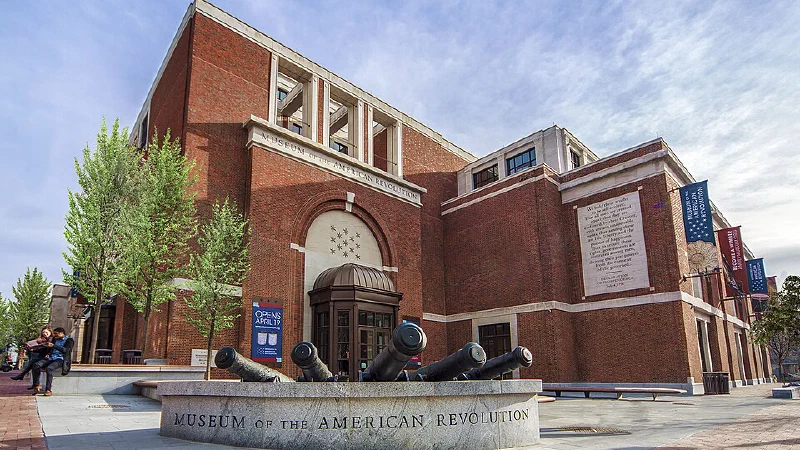
Museum of the American Revolution

Museum of the American Revolution

The museum at Third and Chestnut presenting the full story of the American Revolution through immersive galleries, more than 1,000 original artifacts, and a dramatic theater experience built around George Washington's surviving campaign headquarters tent.

Learn more

The Museum of the American Revolution opened in April 2017 on the edge of Old City Philadelphia, designed by Robert A.M. Stern Architects. Its founding premise was that no museum in the country comprehensively told the story of the Revolution from all perspectives — not just the political leaders and military commanders, but the enslaved people who sought freedom on both sides, the Native nations whose lands were contested, the Loyalists who remained committed to the Crown, and the ordinary soldiers and civilians who lived through the war.

The museum’s permanent collection of more than 3,000 objects includes muskets, swords, drums, uniforms, documents, and personal effects spanning the colonial era through the early republic. The exhibition design uses period rooms, film projections, and immersive set pieces to place artifacts in their historical context.

The centerpiece experience is a dedicated theater built around George Washington’s field marquee — the large command tent he used as his mobile headquarters throughout the war from 1776 to 1783. The tent, made of linen and measuring roughly 20 by 20 feet when assembled, survived in the Washington family’s possession for nearly two centuries before coming to the museum’s collection. The theater experience opens with theatrical lighting and narration to reveal the tent at the dramatic conclusion, placing visitors in the physical presence of one of the most significant surviving objects of the Revolutionary War.

Christ Church Burial Ground

Christ Church Burial Ground

The 1744 Anglican church on Second Street where fifteen signers of the Declaration of Independence worshipped, and its burial ground at Fifth and Arch where Benjamin Franklin, his wife Deborah, and four other Founding Fathers are interred.

Learn more

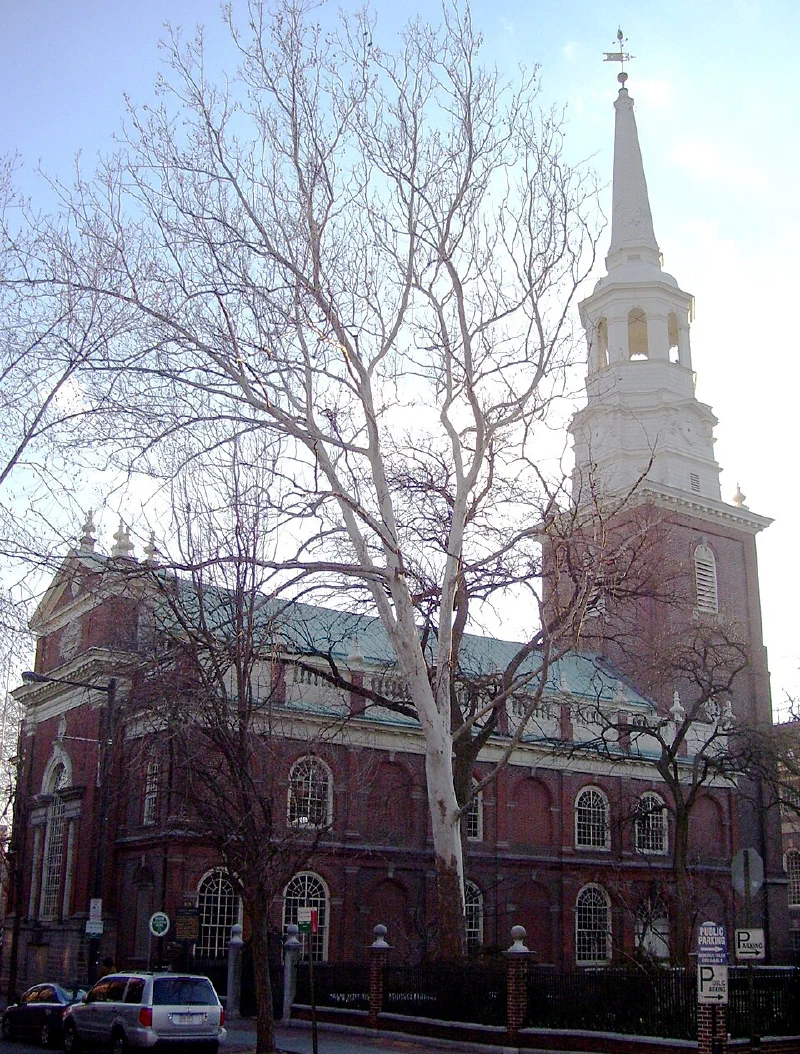
Christ Church was established in 1695 as the first Anglican congregation in Pennsylvania, built to serve the English settlers of William Penn’s colony. The current building, completed in 1744, was designed in the English Baroque style by Dr. John Kearsley and is among the finest Georgian church buildings in America. Its 196-foot steeple made it the tallest structure in the colonies for much of the eighteenth century. George Washington, John Adams, Betsy Ross, and Robert Morris all worshipped here; fifteen signers of the Declaration of Independence were members of the congregation.

The church’s box pews, wine-glass pulpit, and Palladian window behind the altar survive largely intact from the colonial period. Washington’s pew, marked with a small plaque, sits near the front on the right side of the nave. The church continues as an active Episcopal congregation and offers tours alongside its regular services.

Christ Church Burial Ground, located two blocks away at Fifth and Arch Streets, opened in 1719 as the church’s overflow cemetery when the churchyard became full. Benjamin Franklin and his wife Deborah are buried here beneath a flat marble slab in the southeast corner of the ground, visible through an iron fence from the street. Franklin’s grave has become a Philadelphia tradition: visitors toss pennies onto the stone, honoring the man who coined “a penny saved is a penny earned.” Also buried here are four other signers of the Declaration — Francis Hopkinson, Joseph Hewes, George Ross, and Benjamin Rush — as well as numerous Revolutionary War officers.

Philadelphia Museum of Art

Philadelphia Museum of Art

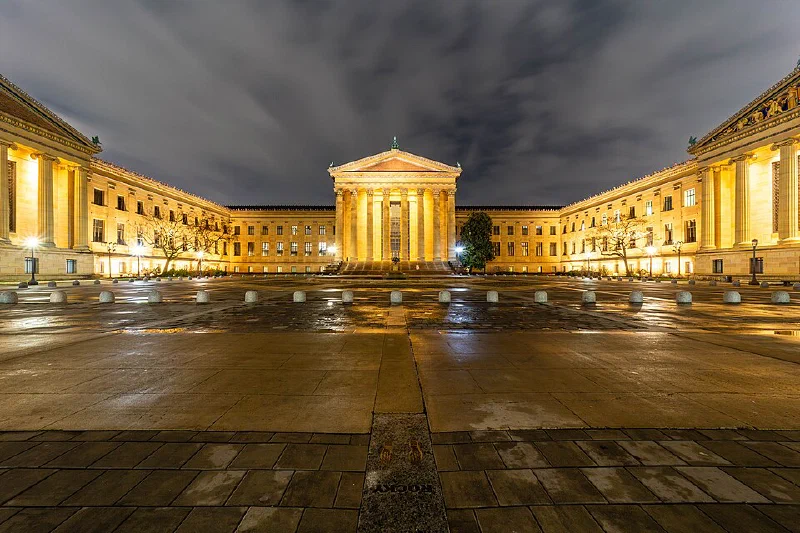
One of the largest art museums in the United States, housed in a neoclassical temple at the head of the Benjamin Franklin Parkway — best known to the world for its 72-step grand staircase, immortalized as the "Rocky Steps" in the 1976 film.

Learn more

The Philadelphia Museum of Art opened its current building in 1928 after decades of construction, replacing the city’s earlier Memorial Hall from the 1876 Centennial Exposition. The Greek Revival structure — modeled loosely on the Parthenon, with polychrome terracotta ornamentation on the pediments — sits at the western terminus of the Benjamin Franklin Parkway at the edge of Fairmount Park. Its collection spans more than 240,000 objects across 200 galleries, with particular strength in European painting, American art, and Asian decorative arts.

The museum’s most famous feature is not inside it. The grand staircase leading from the Parkway to the main entrance became a cultural landmark in 1976 when Sylvester Stallone ran up it in the first Rocky film, raising his fists to the strains of “Gonna Fly Now.” The sequence — and the four subsequent sequels and prequels that reprised it — made the steps a pilgrimage site for visitors who come to run the climb and pump their fists at the top, regardless of whether they ever enter the museum.

A bronze statue of Rocky Balboa, originally created as a prop for Rocky III in 1982 and donated to the city by Stallone, stands at the base of the steps. It was placed at various locations around the museum and stadium area over the decades before finding a permanent home here. The Museum of Art and the Rocky statue are arguably the most-photographed pairing in the city.

The Game

New York Mets @ Philadelphia Phillies

Sunday, June 21, 2026
NYM • NL
New York Mets
2
vs
PHI • NL
Philadelphia Phillies
6
🏆 Citizens Bank Park, Philadelphia, PA 👥 41,552 fans
Pitching
Win Zack Wheeler (PHI) 5.2 IP, 4 H, 2 ER, 3 BB, 7 K
Loss David Peterson (NYM) 4 IP, 6 H, 4 ER, 2 BB, 5 K
Home Runs
  • Kyle Schwarber (PHI) — Inning 2 · off David Peterson
  • Bryce Harper (PHI) — Inning 5 · off Austin Warren
  • Carson Benge (NYM) — Inning 3 · off Zack Wheeler

The Phillies jumped ahead quickly as David Peterson struggled in the early innings. Trea Turner drew a leadoff walk in the first, and after Kyle Schwarber reached on a walk, Alec Bohm's ground single to third scored Turner — aided by a throwing error from Brett Baty — and Edmundo Sosa's single plated Schwarber to make it 2–0. The Phillies then blew it open in the second: with Bryson Stott and Turner on base, Schwarber crushed a three-run home run to deep right field off Peterson to put Philadelphia ahead 5–0. Zack Wheeler was dominant throughout, striking out seven Mets batters in 5⅔ innings of work. Carson Benge answered for New York with a solo home run to the left-field line in the third, and Bryce Harper added a solo blast to right in the fifth off Austin Warren to push the lead to 6–1. A.J. Ewing's forceout in the sixth scored Benge for the Mets' second run in the final 6–2 result. The Phillies won in front of 41,552 fans on a warm, cloudy June evening.