US Capitol – House and Senate Chamber self-guided tour
National Archives
Walk The Mall
Day 2
White House, Ford's Theatre, Museums
Friday, June 10
White House tour
Ford's Theatre
Smithsonian Museums - Air and Space; American History
Phillies vs. Nationals at National's Park
Day 3
U.S. Capital, Supreme Court, Arlington National Cemetery
Saturday, June 11
US Capitol guided tour
Supreme Court - outside only
Arlington National Cemetery
The Mall and Monuments
Day 4
Travel home
Sunday, June 12
United States Holocaust Memorial Museum (Lehmer only)
Travel home
Historical Sites
June 9, 2016Washington, DC
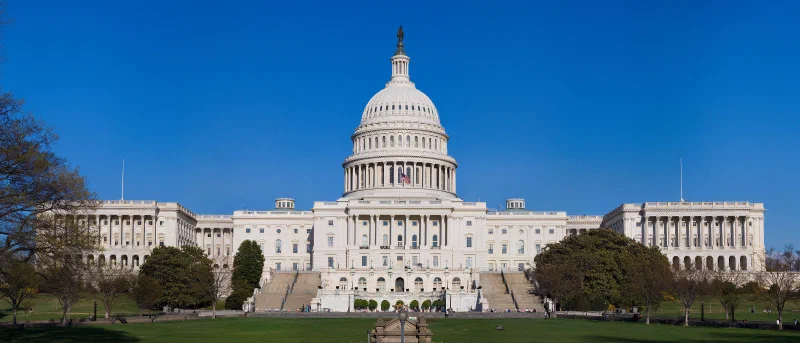
United States Capitol
The seat of the U.S. Congress since 1800, housing both the Senate and House of Representatives beneath the iconic cast-iron dome completed during the Civil War.
Learn more
The Capitol’s design evolved through contributions from William Thornton, Benjamin Henry
Latrobe, and Charles Bulfinch before Thomas U. Walter added the iconic dome between 1855
and 1866. Lincoln insisted work continue on the dome during the Civil War as a symbol that
the Union would endure, and the Statue of Freedom was hoisted to its crown in December 1863.
The building houses the Senate and House chambers, the Capitol Rotunda with its Brumidi
frescoes, and the old Supreme Court chamber.
June 9, 2016Washington, DC
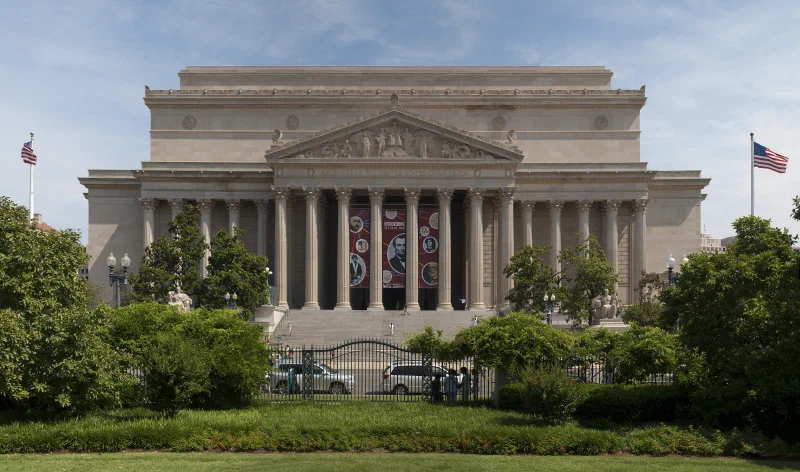
National Archives
The National Archives Building on the National Mall holds the nation's three founding documents — the Declaration of Independence, the Constitution, and the Bill of Rights — displayed together in the Rotunda for the Charters of Freedom.
Learn more
The building, completed in 1935 and designed by John Russell Pope in a neoclassical style,
serves as the public face of the National Archives and Records Administration. The Rotunda’s
Charters of Freedom are encased in argon-filled titanium and aluminum enclosures to prevent
deterioration, and the parchment documents remain largely legible despite their age.
Beyond the Charters exhibit, the Archives hold billions of pages of federal records spanning
census data, military service records, immigration files, and congressional proceedings.
The institution is the primary research destination for historians and genealogists working
with government materials dating back to the founding era.
June 9, 2016Washington, DC
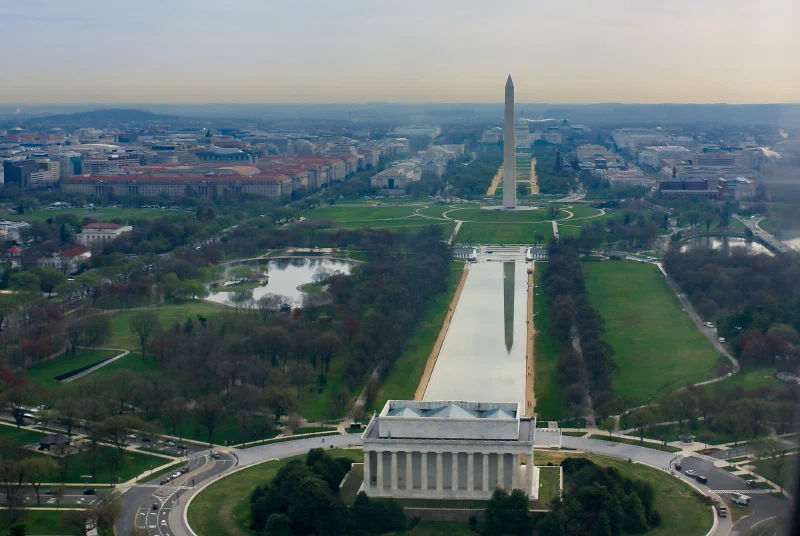
National Mall
A two-mile ceremonial greensward stretching from the Capitol to the Lincoln Memorial, flanked by Smithsonian museums and anchored at its center by the Washington Monument.
Learn more
The Mall’s layout was largely shaped by the McMillan Plan of 1902, which formalized Pierre
Charles L’Enfant’s original vision for the capital as a grand civic axis. The Washington
Monument — at 555 feet the world’s tallest obelisk when completed in 1884 — anchors the
Mall’s midpoint and aligns with the White House to the north and the Jefferson Memorial
to the south across the Tidal Basin.
The Mall has hosted defining moments in American public life, from the 1963 March on
Washington to presidential inaugurations and national memorials.
June 10, 2016Washington, DC
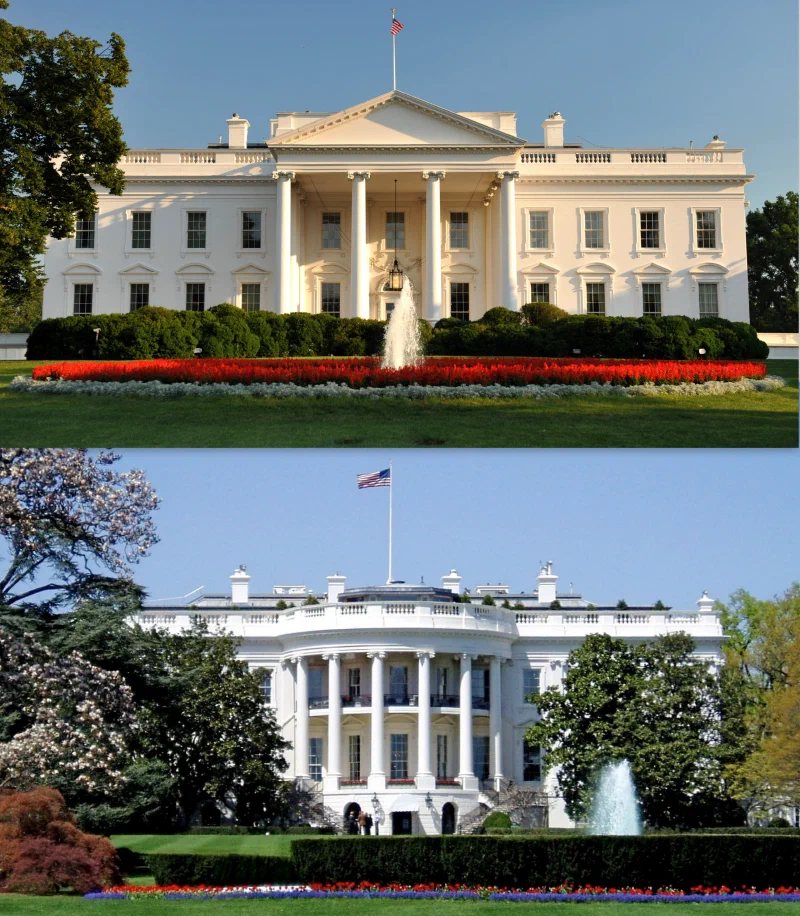
White House
The official residence and workplace of every U.S. president since John Adams in 1800, designed by James Hoban in a neoclassical style and rebuilt after British forces burned the structure in 1814.
Learn more
The White House was constructed between 1792 and 1800 on a site selected by George
Washington, though he never lived there. After the British burned the building in August
1814, James Hoban supervised its reconstruction, and the exterior sandstone was painted
white — a practice that became permanent and gave the residence its modern name.
Congressional tour requests allow visitors access to the State Floor rooms, including the
East Room, the Red and Blue and Green rooms, and the State Dining Room. These spaces have
hosted treaty signings, state dinners, press briefings, and presidential addresses
throughout more than two centuries of American political history.
June 10, 2016Washington, DC
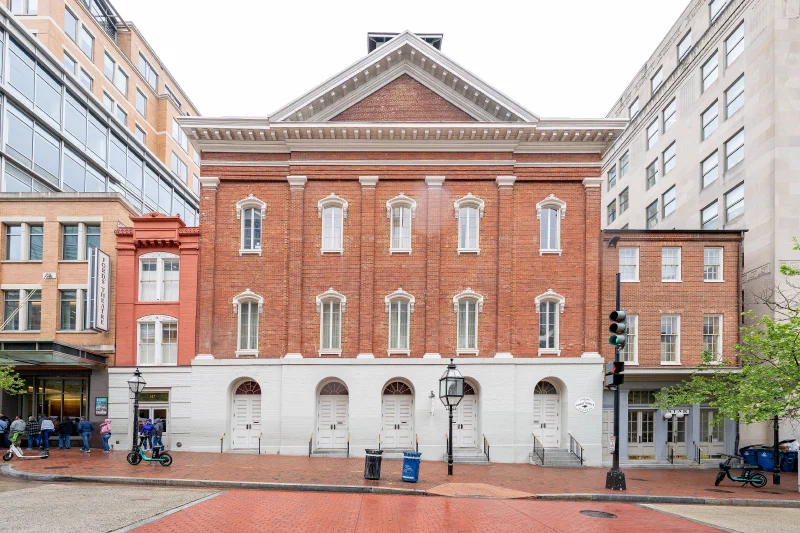
Ford's Theatre
The theatre where Abraham Lincoln was assassinated on the evening of April 14, 1865, now preserved as a National Historic Site and active performance venue operated by the National Park Service.
Learn more
On the night of April 14, 1865, actor John Wilkes Booth shot President Lincoln during a
performance of “Our American Cousin” in the presidential box on the theatre’s dress circle
level. Lincoln was carried across Tenth Street to the Petersen House, where he died the
following morning. Booth escaped through the stage door and was killed twelve days later
at a Virginia farm.
The National Park Service restored and reopened the theatre in 1968 as both a working
performance venue and a museum. The basement museum holds Lincoln’s deathbed, Booth’s
single-shot derringer, the clothes Lincoln wore that evening, and a large collection of
artifacts documenting the assassination and its immediate aftermath.
June 10, 2016Washington, DC
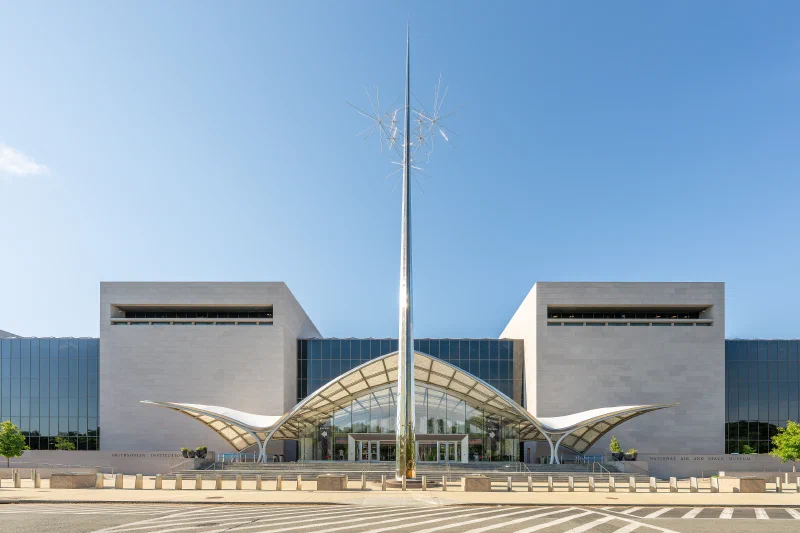
Smithsonian National Air and Space Museum
The world's largest collection of historic aircraft and spacecraft, opened on the National Mall in 1976 and spanning the full arc of powered flight from the Wright Brothers through the Space Age.
Learn more
The museum’s flagship galleries include the 1903 Wright Flyer, Charles Lindbergh’s Spirit
of St. Louis, Chuck Yeager’s Bell X-1 Glamorous Glennis, and the Apollo 11 command module
Columbia — the capsule that carried Armstrong, Aldrin, and Collins on the first lunar
landing mission in July 1969. Many of the aircraft and spacecraft on display are the
original vehicles rather than replicas.
Exhibits cover military aviation from World War I through the jet age, the Cold War space
race between the United States and Soviet Union, rocketry, and the development of
commercial air travel. The museum’s location directly on the Mall between the Capitol
and the Washington Monument makes it one of the most visited institutions in the world.
June 10, 2016Washington, DC
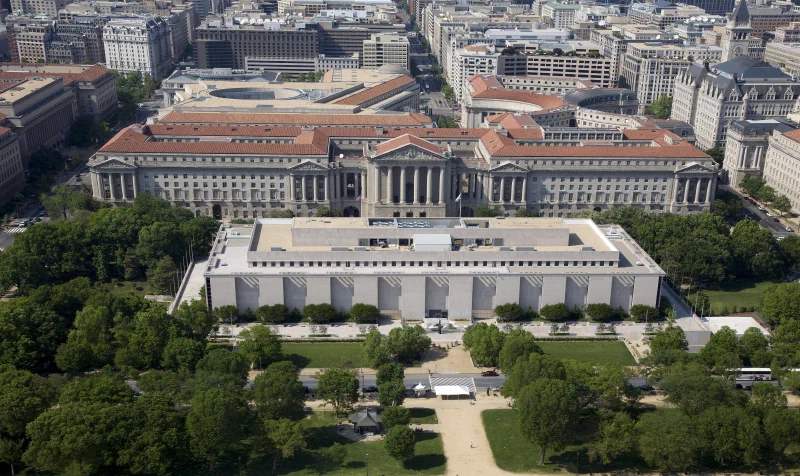
Smithsonian National Museum of American History
The Smithsonian's museum of U.S. political, cultural, and technological history, holding more than 1.8 million objects and best known for the Star-Spangled Banner — the flag that flew over Fort McHenry during the British bombardment of Baltimore in 1814.
Learn more
The museum opened in 1964 as the Museum of History and Technology before being renamed in
1980. Its centerpiece, the Star-Spangled Banner, is a 30-by-34-foot wool bunting flag
commissioned by Fort McHenry’s commander before the War of 1812. After inspiring Francis
Scott Key to write the poem that became the national anthem, the flag was preserved by the
Armistead family and donated to the Smithsonian in 1907.
Collections range from inaugural gowns and presidential artifacts to Julia Child’s kitchen,
Thomas Edison’s experimental light bulbs, and the original Kermit the Frog puppet. The
museum’s American Democracy and American Presidency galleries document the country’s
political history through objects that witnessed it firsthand.
June 10, 2016Washington, DC
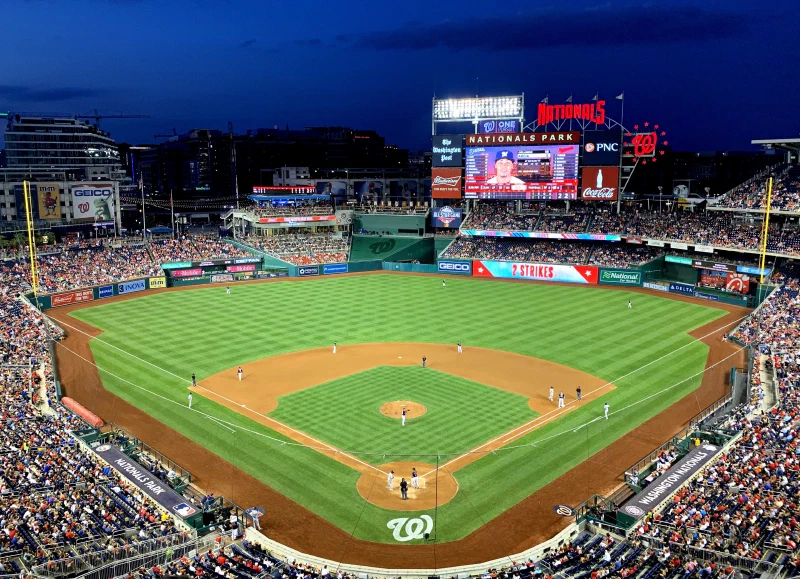
Nationals Park
Home of the Washington Nationals since 2008, located along the Anacostia waterfront in the Navy Yard neighborhood — the first LEED-certified stadium in Major League Baseball.
Learn more
Nationals Park replaced RFK Stadium as the Nationals’ home after the franchise relocated
from Montreal in 2005. The 41,339-seat ballpark was designed by HOK Sport and opened in
March 2008 with President George W. Bush throwing out the ceremonial first pitch. Its
construction anchored a major redevelopment of the Southeast waterfront neighborhood.
The 2016 trip brought a Phillies-Nationals matchup, continuing the tradition of pairing
presidential and historical sites with a major league game. The park’s upper deck offers
views toward the Capitol dome, placing baseball against one of the most recognizable
skylines in American civic architecture.
June 11, 2016Washington, DC
Supreme Court of the United States
The seat of the nation's highest court, housed since 1935 in a marble neoclassical building directly across First Street from the Capitol, bearing the inscription "Equal Justice Under Law" above its columned entrance.
Learn more
Chief Justice William Howard Taft — the only person to serve as both president and Chief
Justice — was the primary advocate for giving the Court its own building after it had
shared space with Congress for nearly 150 years. The building, designed by Cass Gilbert
and completed in 1935, features Corinthian columns, bronze doors, and a Great Hall lined
with busts of former Chief Justices.
The Court’s exterior and public spaces are accessible to visitors, and the Chamber itself
is open when the Court is not in session. Landmark decisions on civil rights, presidential
power, and the reach of the Constitution have been handed down from the bench inside,
making the building a focal point of American legal and political history.
June 11, 2016Arlington, VA
Arlington National Cemetery
A 639-acre national cemetery established in 1864 on the grounds of the former Arlington House estate, holding more than 400,000 military veterans and home to the Tomb of the Unknown Soldier and the gravesite of President John F. Kennedy.
Learn more
Arlington National Cemetery was established during the Civil War on the grounds of
Arlington House, the estate of Robert E. Lee’s wife Mary Anna Custis. The first burials
were Union soldiers in 1864, placed deliberately close to the house to prevent the Lee
family from reclaiming the property. The estate had been seized by the federal government
after the Custis family failed to pay property taxes in person during the war.
The Tomb of the Unknown Soldier, a marble sarcophagus on a plaza overlooking Washington,
has been guarded continuously by the Army’s 3rd U.S. Infantry Regiment since 1937. Nearby,
the gravesite of President Kennedy — marked by an eternal flame — was dedicated in 1967
and became one of the most visited memorials in the country within months of opening.
June 12, 2016Washington, DC
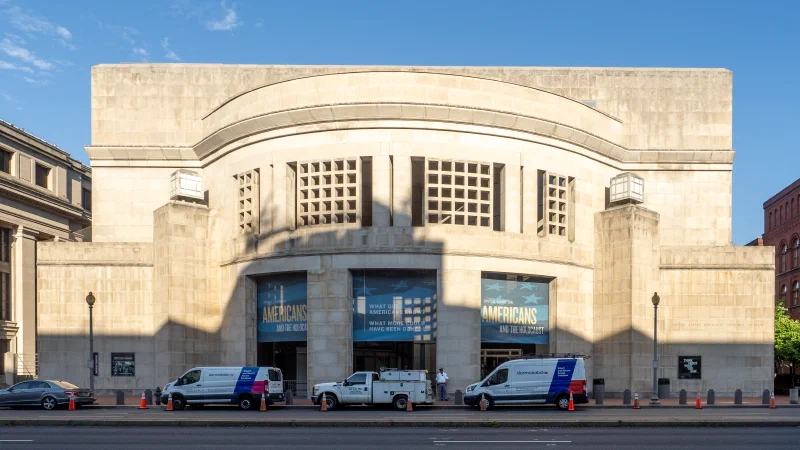
United States Holocaust Memorial Museum
A living memorial to the Holocaust and an active research institution, located steps from the National Mall and dedicated to the documentation, study, and interpretation of Nazi persecution and genocide from 1933 to 1945.
Learn more
The museum opened in April 1993 after a decade of planning led by a presidentially
appointed commission. Its permanent exhibition, “The Holocaust,” occupies three floors
and uses artifacts, photographs, film, and survivor testimonies to document the rise of
the Nazi regime, the progression of persecution, and the systematic murder of six million
Jews along with millions of others.
The building, designed by James Ingo Freed, incorporates architectural elements that echo
the industrial brutality of the camps — exposed brick and steel, surveillance windows, and
claustrophobic passageways. A glass-roofed Hall of Remembrance at the building’s center
provides a space for individual reflection and candle lighting in memory of victims.
The Game
Philadelphia Phillies @ Washington Nationals
Friday, June 10, 2016
PHI • NL
Philadelphia Phillies
6
vs
WSN • NL
Washington Nationals
9
🏆 Nationals Park, Washington, DC👥 37,941 fans
Pitching
WinStephen Strasburg (WSN)7 IP, 5 H, 4 ER, 10 K
LossJeremy Hellickson (PHI)6 IP, 9 H, 7 ER, 2 K
SaveJonathan Papelbon (WSN)1 IP, 0 H, 0 ER, 1 K
Home Runs
Tommy Joseph (PHI) — Inning 3
· 408 ft
· off Stephen Strasburg
Wilson Ramos (WSN) — Inning 4
· 402 ft
· off Jeremy Hellickson
Stephen Drew (WSN) — Inning 4
· 391 ft
· off Jeremy Hellickson
Danny Espinosa (WSN) — Inning 6
· 385 ft
· off Jeremy Hellickson
Tommy Joseph (PHI) — Inning 8
· 394 ft
· off Felipe Vazquez
Stephen Strasburg dominated for seven innings, striking out 10, as the Nationals rallied from a 4-0 deficit to beat the Phillies 9-6 at Nationals Park. Ramos and Drew hit back-to-back solo shots in the fourth to tie the game, Daniel Murphy's two-run double in the fifth put Washington ahead for good, and Danny Espinosa added a solo blast in the sixth. Tommy Joseph slugged two home runs for Philadelphia, but it wasn't enough against Strasburg, who improved to 10-0 on the season. Jonathan Papelbon closed it out for the save.